Pages

Showing posts with label SEO. Show all posts

Monday, 2 October 2017

Moving to HTTPS? Don’t miss this unique opportunity!

Google recently announced that forms on web pages over HTTP will be marked as 'not secure' in Chrome starting this month. Columnist Fili Wiese believes this presents a good opportunity to make the switch to HTTPS -- and that webmasters can take advantage of this switch to implement other SEO improvements.

Most SEOs have heard by now that moving web pages with forms to HTTPS is necessary to avoid being shown as “not secure” in Chrome 62.
Moving to HTTPS is a good step to take for a number of reasons, but there is also an unique SEO opportunity which is often overlooked — an opportunity that can significantly help your website with its SEO rankings, if done properly.
So, what is the opportunity? Moving to HTTPS will encourage Googlebot to recrawl most of your URLs. Googlebot has its own mechanism for determining and prioritizing which URLs to recrawl; however, when Googlebot detects a move to HTTPS, it tends to temporarily increase the crawl rate in an attempt to crawl as many URLs as possible within a short time frame. As such, this is a unique, one-time opportunity to improve your overall website’s signals in the Google Index.

Crawl budget

Most sites have a certain crawl rate, based on a number of factors such as page speed, internal linking, external linking and popularity. For larger websites (i.e., those with more than 100,000 URLs), this often means that it can take a while before Googlebot picks up on new SEO signals.
Check the server log files of the last few years and see how many unique URLs Googlebot has attempted to crawl during this time frame. That is at least the number of unique URLs Googlebot knows about. And due to Googlebot’s own prioritization mechanism, the SEO’s hands can be a bit tied when it comes to making improvements, although optimizations are still certainly possible.

Once-in-a-lifetime opportunity

Any seasoned SEO would love it if they could ask Googlebot to recrawl their entire website (on the same domain/hostname) after implementing SEO improvements. And this is where the move to HTTPS comes in. If your website is large and not yet moved to HTTPS, this presents a unique opportunity to have your site recrawled — so consider implementing some major SEO improvements right before doing so.
I recommend the following steps:
  1. Perform an SEO audit as soon as possible. Keep in mind that it can take a few weeks to complete an SEO audit.
  2. Have a development team ready to implement the recommendations of the SEO audit without delay.
  3. Test your infrastructure for HTTPS and HTTP/2 (This can be done parallel during the SEO audit).
  4. Once the SEO audit has been completed and the recommendations implemented, then and only then, move your website to HTTPS.
Once moved to HTTPS, Googlebot will recrawl most of your website’s URLs, which at this stage will have improved SEO signals.

How about the ‘not secure’ warning after October?

It is possible that, even after taking the steps above, your website may still show the “not secure” warning on form web pages in Chrome for a while, especially if it takes a long time to complete your SEO audit and implement the recommended changes. However, your website will not be the only one. This is not the time to fret about a few months of a warning when users are not yet fully used to it and other large, well-known websites are displaying these warnings as well.
Instead, plan to complete the steps recommended above within the next few months (preferably before the end of the year or in Q1 2018), and your website will reap the benefits from moving to HTTPS: renewed and improved SEO signals in the Google index.

Some opinions expressed in this article may be those of a guest author and not necessarily Search Engine Land. Staff authors are listed here.

 know more latest update or tips about Search Engine Optimization (SEO), Search Engine Marketing (SEM) - Fill ContactUs Form or call at +44 2032892236 or Email us at - adviser.illusiongroups@gmail.com.

Tuesday, 19 September 2017

Report: Google to debut ‘Home Mini’ smart speaker for $49 on October 4

The device is Google's answer to the low-cost Amazon Echo Dot.

Google is set to reveal the Pixel 2 smartphone and potentially other hardware at an event on October 4, in time for holiday shopping. While the Pixel 2 is set to be the star of the event, a prominent supporting role will be played by the new “Google Home Mini.”
This is apparently Google’s answer to the low-cost Amazon Echo Dot. According to Droid Life, it will be priced comparably at $49 and be available in three colors.
The device will support the Google Assistant and reportedly will provide the same functionality as Google Home. It’s all but certain the sound quality won’t be as good. And there may be other hardware compromises to bring costs down. It will very likely broaden the market for Google Home and the Google Assistant.
Amazon has created multiple Alexa devices for different budgets:
  • Dot — $49
  • Echo Tap — $129
  • Echo — $179
  • Echo Show — $229
Amazon often discounts the devices and offers multiple purchase incentives, including on the Dot. To date, Google has only introduced the Home, which retails for $129 but is often discounted to $99. Apple’s Siri-powered HomePod is going to retail for $349 and is positioned as a higher-end smart speaker for the Sonos demographic.
According to one estimate, Amazon dominates the US smart speaker market today. It has also been projected that by the end of 2017, there will be 30 million of these devices in US households. Assistant-enabled smart speakers are the cornerstone for the smart home ecosystem, and we’re in the midst of a land-grab right now.
ComScore has projected that roughly 50 percent of US search queries will be voice-initiated by 2020. More smart speakers in more American homes will help accelerate that trend.
 know more latest update or tips about Search Engine Optimization (SEO), Search Engine Marketing (SEM) - Fill ContactUs Form or call at +44 2032892236 or Email us at - adviser.illusiongroups@gmail.com. 

Google Search lets readers find e-books at their local libraries

The new search feature is currently available on mobile.

Google just made it easier for readers to find an e-book at their local library.
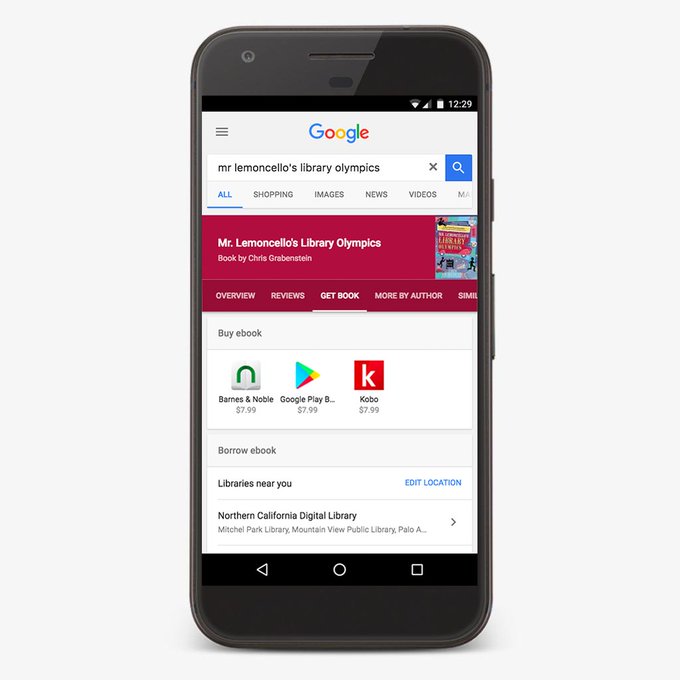
Per the following tweet from Google, mobile search results for a book now include a “Borrow e-book” option under the “Get Book” section.
Tapping on the library from where you want to check out the e-book will return the sign-in page for the library, along with the option to download the book or read a sample:
The library location can be edited within the search app by tapping on the “edit location” link next to the “Libraries Near You” option. This new feature appears to only be available on mobile.
 know more latest update or tips about Search Engine Optimization (SEO), Search Engine Marketing (SEM) - Fill ContactUs Form or call at +44 2032892236 or Email us at - adviser.illusiongroups@gmail.com. 

Thursday, 14 September 2017

Leading up to the mobile-first index, Google has some advice

Want to take your mobile site from an m-dot to responsive? Here is how Google recommends you do it.

We all know the Google mobile first index is coming soon, probably in the next few months or so. To prepare, it seems like Google is encouraging webmasters to go responsive with their web sites.
Google has just published a how-to on moving your m-dot site to responsive. The techniques are pretty basic but it is an excellent reminder that while Google supports many mobile implementations, they do recommend responsive. In fact, Google has recommended that if you are switching to responsive, do it before the mobile first rollout.
Here are the steps Google wrote to move from m-dot to responsive:
  1. Get your responsive site ready
  2. Configure 301 redirects on the old mobile URLs to point to the responsive versions (the new pages). These redirects need to be done on a per-URL basis, individually from each mobile URLs to the responsive URLs.
  3. Remove any mobile-URL specific configuration your site might have, such as conditional redirects or a vary HTTP header.
  4. As a good practice, setup rel=canonical on the responsive URLs pointing to themselves (self-referential canonicals).
know more latest update or tips about Search Engine Optimization (SEO), Search Engine Marketing (SEM) - Fill ContactUs Form or call at +44 2032892236 or Email us at - adviser.illusiongroups@gmail.com. 

How to conduct an SEO content audit

Columnist Thomas Stern shows how a content audit, when done right, can help you assess whether your content is relevant not only to your brand goals and SEO objectives, but also to the customer’s needs.

Google has thrown a ton of changes at marketers over the last few years. From major algorithm updates to voice search, all of these changes follow Google’s ultimate goal of creating the best search experience for its users.
The upshot is that it’s not enough to develop and optimize website content for just search engines anymore. As better language processing has become a major focus for improving search results, your brand’s site content is no longer speaking to search engines alone, but to actual people.
To appeal to both people and search engines, brands must evaluate their site content through an audit process to discover what may (or may not) be working and determine where to improve. A website content audit is the cornerstone of your entire content strategy.
When done right, a content audit helps to determine whether your website content is relevant to not only your brand goals and marketing objectives, but also to the customer’s needs. Audits can identify problems with accuracy, consistency, voice and tone; they can also provide direction for SEO.

Review existing content

Not every content audit is the same; it takes familiarity in many different digital marketing channels to set up a framework for success. However, each content audit has a few things in common, like evaluating quantitative and qualitative metrics for each page of a website.
The first step in each content audit is to record all of a website’s existing content. At ZOG Digital, we find it easiest to centralize the data and break out information like URLs, page titles, conversion rates, meta descriptions and so forth in a single spreadsheet to begin our process.
Take the time to evaluate your audience’s search habits and any historical data you have available. Some of the tools we like to use include:
  • Screaming Frog crawls websites’ pages, links and images and allows us to export the data to a spreadsheet.
  • Google Analytics lets us export the success metrics of each page, broken out by marketing channel.
  • Ahrefs allows us to look at the backlink profiles of each of our target pages.
Next, we layer in qualitative data about the page from a brand level and a content quality level. For our clients, we measure key pages against intended audience segments and brand objectives. As you evaluate each page, you should be able to appropriately grade each page and define next steps for them, too.
With each content audit, you need to define problems with your site’s overall health and identify any strengths and weaknesses. If you decide that the content lacks substance or has weak traffic but is essential to the brand, the content needs to be refreshed for current audiences. You’ll begin to see themes in each category page and be able to make informed recommendations for each part of the site.

Content creation for audience segmentation

After defining next steps, you need to be able to execute it effectively for your target audiences. Successful content marketing is all about targeting a niche and then, of course, making the most out of it in terms of engagement and revenue. Through audience segmentation, you can have laser-focused strategies around each audience type.
For an organization with a large B2B audience segment, like GE, product page or case study content may be the most important piece of content for their target audiences. For Nest, an innovative home and security brand, videos and testimonials might be more effective to establish the use case and value.
You have to refine your marketing tactics in a thoughtful manner when it comes to reaching your target audience. While defining, segmenting and prioritizing your audiences, you also need to define what content type will fill in a gap found in your content audit while also resonating your target audience.
This is where many brands will struggle — they need an agile team of experts to solve the problems uncovered by an initial content audit, while also aligning with target audience segments. Upon evaluating all aspects of current site content, you can fill in the gaps and create more appealing verbiage for your target audiences. Few brands have mastered this technique, and it’s key to be aware of their tactics and how they validate success.
For example, Mercedes-Benz ensures that a majority of their content is made for (and visible to) those who are willing to pay for their high-quality cars. However, they know they want to break into a younger demographic of drivers as well. That’s why they also create content and products that fit in with a millennial’s values, like high value for an affordable price, as well as a strong customer-brand relationship.
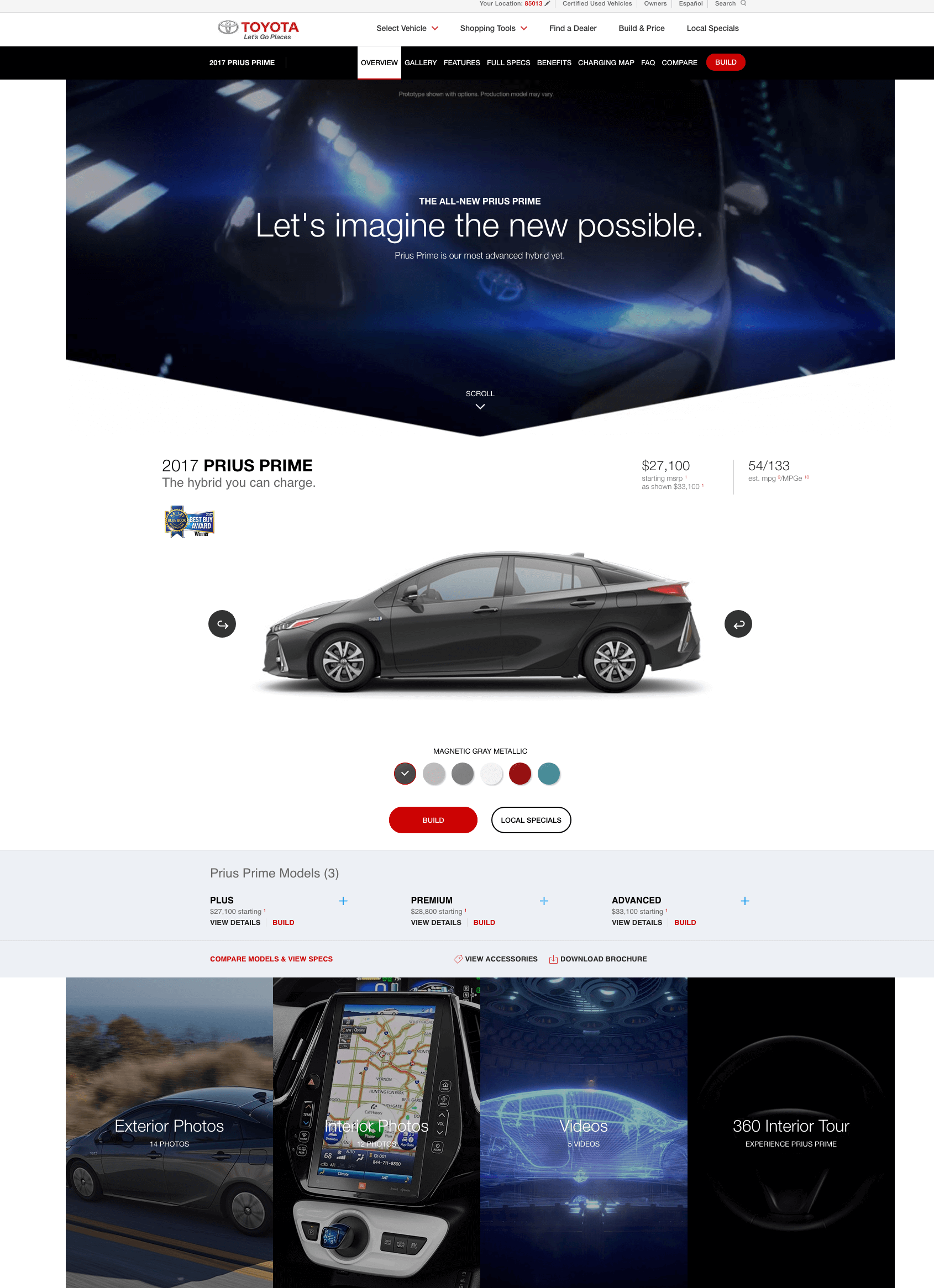
You’ll notice in the screen shot below that the first feature listed on the page is phone connectivity, rather than features like mileage or horsepower.
Meanwhile, Toyota’s been marketing their Prius Prime. The auto company claims this to be their most advanced hybrid yet, at a more affordable price than luxury car dealers. Toyota uses infographics to target millennials in the market for new cars who also care about energy efficiency.

Both car brands use different types of content to target their audiences on a deeper level. Notice that the goal is to focus on educating the consumer — they focus on audience segments before anything else.
It’s critical to take the time to augment the quantitative data by evaluating each page based on what humans value. For content audits, you need to appeal to both people and Google by being descriptive with a human touch. You can use the following tools to evaluate the quality of your content and formulate a clear understanding when it comes to content creation:
  • Google’s definition of high-quality content includes important factors like trustworthiness and expertise.
  • Triblio allows you to create personalized content for multichannel campaigns by persona.
  • Google AdWords Keyword Planner provides information on the interest (search volume) of target topics.
  • HemingwayApp grades pages based on how difficult they are to read.
We recommend doing a content audit every six to 12 months to ensure consistency and effectiveness of your on-site content as people and search engines evolve. An initial content audit will establish a baseline of data and insights to help you improve content quality. The subsequent content audits will then show you how your pages have grown since you implemented changes, as well as pinpointing any weaknesses that should be addressed.

Final thoughts

By developing a comprehensive content strategy around what you uncover with a robust content audit, you’ll be better able to improve your content development methods and have a baseline for any future changes or updates.

know more latest update or tips about Search Engine Optimization (SEO), Search Engine Marketing (SEM) - Fill ContactUs Form or call at +44 2032892236 or Email us at - adviser.illusiongroups@gmail.com. 
Monday, 11 September 2017

Announcing the shortlist of 2017 Search Engine Land Awards nominees

The 3rd annual competition puts the spotlight on SEO & SEM professionals at the top of their game.

For the third consecutive year, the selection process in the Search Engine Land Awards became even more difficult, as the field of competition grew to nearly 300 worthy submissions from leading digital agencies, in-house marketing teams and individuals around the world.  
Michelle Robbins, the newly appointed SVP of content and editor-in-chief of Search Engine Land, was incredibly impressed by the depth and scope of entries in this year’s competition. “As a first-time judge, having the opportunity to pull back the curtain and examine the campaigns executed by some of the top search marketers in the industry was inspiring. The work done, creativity expressed and results achieved demonstrate what a truly talented community it is that we serve.”
Robbins and Ginny Marvin, associate editor at Search Engine Land, will also co-host this year’s awards presentation.
Marvin, now in her third year of judging the growing field of applicants, added, “The consistently sophisticated, creative and inspiring quality of the campaigns submitted for the awards this year made judging a true honor. There is incredible work happening in search marketing, and the entries this year exemplify that.”
Independent research firm Clutch.co vetted the top candidates in the Agency of the Year categories for the second year in a row. Tim Clarke of Clutch noted the increasing quality of the work submitted. “We were especially impressed by the volume of metrics and quantifiable evidence of success from all the 2017 submissions. The dedication to client service, communication and innovation stood out from this year’s entries. The agencies that entered truly are cutting edge.”

And the finalists are …

In alphabetical order by category:

Best Retail Search Marketing Initiative — SEM

  • Adtaxi for a pet retailer (client name withheld)
  • Brainlabs for London Theatre Direct
  • PMG for a luxury apparel retailer (client name withheld)
  • Resolution Media Canada for Sport Chek
  • Wolfgang Digital for Littlewoods Ireland

Best Retail Search Marketing Initiative — SEO

  • Digital Third Coast for a home & garden retailer (client name withheld)
  • Go Fish Digital for Bella Ella Boutique
  • iCrossing for a pet retailer (client name withheld)
  • Nebo for Buy-Rite
  • Nina Hale, Inc. for Room and Board

Best Local Search Marketing Initiative — SEM

  • DAC Group for Bridgestone Retail Operations 
  • Local Search Masters for child development programs (client name withheld)
  • LSEO for Manhattan CryoBank
  • Merkle | Periscopix (UK) for Housekeep
  • Resolution Media Canada for Belron Canada

Best Local Search Marketing Initiative — SEO

  • Blue Wheel Media for Monark Premium Appliance Co.
  • Odd Dog Media for a Puget Sound Region Healthcare System (client name withheld)
  • Single Interface for PizzaHut (India)
  • Trimark Digital for  Fairview Garden Center
  • Workshop Digital for The Compass School

Best Mobile Search Marketing Initiative — SEM

  • Elite SEM for American Home Shield
  • Merkle (US) for Custom Ink
  • Northern Commerce for Oxford Learning Center
  • Precis Digital for Zmarta
  • Pure Oxygen Labs for WEC Energy Group

Best Mobile Search Marketing Initiative — SEO

  • 97th Floor for Lawn Doctor
  • Back Azimuth for Absolut Drinks
  • iProspect for TEN: The Enthusiast Network
  • Wolfgang Digital for Zurich Life

Best B2B Search Marketing Initiative — SEM

  • EliteSEM for Revel Systems
  • Ledger Bennett for Linkedin
  • Media Horizons for Lightning Labels
  • Millipore Sigma
  • Reprise Media for Stericycle

Best B2B Search Marketing Initiative — SEO

  • BMC Software
  • iCrossing for Republic Services
  • inSegment (client name withheld)
  • NICE inContact
  • Overit (client name withheld)

Best Overall SEO Initiative — Small Business

  • Chris Beck SEO Consulting for Highland Pharms
  • Djital Search for Chicago Steak Company
  • Power Digital Marketing for PlushCare
  • Stone Temple Consulting for kimkim Travel
  • Trimark Digital for Fairview Garden Center

Best Overall SEM Initiative — Small Business

  • Hallam Internet for Brand Outlet
  • Merkle | Periscopix (UK) for Housekeep
  • Nina Hale, Inc. for Mazuri® Exotic Animal Nutrition
  • Publicis North America for Doctors of the World
  • Todd Silverstein for WipeRecord, a division of Eastman Meyler, PC.

Best Overall SEO Initiative — Enterprise

  • Edible (a division of Edelman Digital) for the Florida Department of Citrus
  • iCrossing for DirectTV
  • Reprise Media for a fortune 100 insurance company (client name withheld)
  • SapientRazorfish for H&R Block
  • Wolfgang Digital for Zurich Life

Best Overall SEM Initiative — Enterprise

  • Cloudflare
  • Jellyfish (client name withheld)
  • Nebo for Brookdale
  • Nebo for Mobile World Congress 2017
  • Point It for PEMCO

Best Enterprise SEM Initiative — Travel & Lifestyle

  • Mediahub for Royal Caribbean
  • Smarter Ecommerce for Eventim
  • Travel Tripper for ROW NYC Hotel
  • Trimark Digital for Pinehurst Resort
  • Wolfgang Digital for Dublin Airport

Best Enterprise SEM Initiative — Financial Services

  • Eden Advertising for The National Benefit Authority
  • Merkle (US) for Metlife
  • Precis Digital for Zmarta
  • Spark Foundry for Morgan Stanley

Best Enterprise SEM Initiative — B2B

  • iCrossing for Qlik
  • Mediative for Ruby Receptionists
  • Mediative for Shortel
  • Metric Theory for Servicemax
  • Optum, a division of United Healthcare Group

Best Enterprise SEM Initiative — B2C

  • Beeby, Clark + Meyler for Marriott
  • Brainlabs for Domino’s EuroPizza
  • Horizon Media for Safelite AutoGlass
  • Merkle (US) for HBO Now
  • Point It for PEMCO

Best Integration Of Search Into Cross-Channel Marketing

  • LSEO for Manhattan CryoBank
  • Power Digital Marketing for CannaPet
  • Precis Digital for Daniel Wellington
  • Spark Foundry for Morgan Stanley
  • Wolfgang Digital for Littlewoods Ireland

Best Overall Search Marketing Initiative — SEO & SEM

  • AARP
  • HiveMinds (client name withheld)
  • Nebo for Gas South
  • Web Full Circle (client name withheld)
  • Wolfgang Digital for Littlewoods Ireland

Search Marketer Of The Year — Female

  • Chelsea Ashe, Merkle (US)
  • Kerry Curran, Catalyst / GroupM
  • Genevieve Head-Gordon, Metric Theory
  • Laetitia Kieffer, Catalyst/GroupM
  • Lily Ray, Women’s Marketing

Search Marketer Of The Year — Male

  • Dan Gilbert, Brainlabs
  • Aaron Levy, EliteSEM
  • John Lincoln, Ignite Visibility
  • Manny Rivas, AimClear
  • John Shehata, Condé Nast

In-House Team Of The Year — SEM

  • Comcast
  • Flight Centre Travel Group Australia
  • Macy’s
  • Millipore Sigma
  • UPMC Health Plan

In-House Team Of The Year — SEO

  • Comcast Xfinity
  • Conde Nast
  • Millipore Sigma
  • Thermo Fisher Scientific

Agency Of The Year — SEM

  • iProspect
  • Kubix Digital
  • Merkle (US)
  • Metric Theory
  • wPromote

Agency Of The Year — SEO

  • HigherVisibility
  • Merkle (US)
  • VML
  • Wolfgang Digital
  • Workshop Digital
Winners will be announced during an evening awards ceremony and celebratory gala held on October 25, 2017, in New York City. The gala takes place during the week of Search Engine Land’s annual SMX Conference, where the search industry gathers for continuing education on best practices in SEO and search advertising.
The Search Engine Land Awards Gala is produced by Third Door Media, with the support of Marquee Sponsor Google. A portion of proceeds from the event benefit charity, with Third Door Media guaranteeing a minimum donation of $5,000 this year’s selected organization, Women Who Code.

Some opinions expressed in this article may be those of a guest author and not necessarily Search Engine Land. Staff authors are listed here.

know more latest update or tips about Search Engine Optimization (SEO), Search Engine Marketing (SEM) - Fill ContactUs Form or call at +44 2032892236 or Email us at - adviser.illusiongroups@gmail.com.

Monday, 4 September 2017

5 steps to creating a more efficient link-building campaign

Contributor Jeremy Knauff shares the steps his agency takes, and the tools they use, to create a structured and efficient link-building process.

Link building plays a critical role in SEO today, but despite its importance, many people still approach this component haphazardly. They enthusiastically jump in with both feet, but without a structured process, they fail to achieve the results they could.
In the past, I’ve taken both approaches: I’ve run some link-building campaigns with little to no structure, and I’ve run others with enough structure to make German engineers weep with joy.
I can tell you from firsthand experience that the latter results in a more efficient campaign every single time. Meanwhile, that efficiency leads to better results for your clients and higher profit margins for you. So today, I’m going to share five steps you can use to make your link-building campaigns more efficient.

Start with a plan

I once had a client who, despite having the best of intentions, reminded me of a squirrel who had just guzzled a double espresso. Each time we would develop a detailed marketing plan working toward his goals, he would tell us how much he loved everything, sign off on it, and then within a few weeks, decide that he wanted to focus on some new shiny goal. As you might imagine, this absolutely killed his progress.
Fortunately, he recently stepped down, and the new CEO bases his marketing programs on a plan rather than a whim.
Planning is not a luxury. It’s a necessity that keeps you on track, improves performance and helps you reach your goals more quickly and efficiently because it reduces wasted time and energy.
Think of it in the context of travel. How efficient do you think you would be if you just hopped in your car and started driving with no route in mind, no GPS or map, and only a destination with no plan on how to get there? It’s pretty safe to assume that it would not be an efficient trip, and that’s if you even made it to your destination at all!
You need to develop a detailed link-building plan to maximize your results. It’s not just a numbers game, so by determining exactly what you want to accomplish and outlining the steps necessary to do so, you’ll achieve far greater results, and you’ll do so more quickly.

Focus on a tighter niche

Most SEO professionals today understand the importance of relevance in their link-building campaigns, and I would take this approach a step further. Rather than going after any and every link that is relevant to your content, you should further refine your strategy to go after links from a smaller niche within that pool of relevant websites. That may sound limiting, but hear me out.
Let’s say you’re building links for an architectural firm. Obviously, links from home builders, commercial contractors and engineers would all be relevant, but they would each link to an architectural firm for their own particular reasons — so the content you would need to create to earn those links would be different in each case. Having to create all of these distinct types of content is relatively inefficient.
On the other hand, if you create some amazing content that appeals to home builders, and then systematically conduct outreach targeting that type of site, your workflow will be both more efficient and more productive. You’ll also likely develop contacts who know each other, which come into play later.
Speaking of workflow…

Follow a process

Jumping from activity to activity is a recipe for disaster because it reduces efficiency and makes it more difficult to measure and reproduce results. That’s why an assembly line is so much more efficient than one person building something from start to finish.
When my team builds links, we follow a well-documented process that starts with thorough planning. We will first identify a strategic goal, and then determine what topics we need to rank for to achieve that goal.
From there, we start planning our topics for the next four to 12 months, including core pages as well as blog posts. Next, we identify the ideal websites we want to earn links from and compile their information. Finally, we conduct outreach, build relationships and follow up until we’ve earned those links for our client.
Following a documented process not only helps us produce better results for our clients more quickly, it also helps us to scale our agency more effectively because we can bring new employees on board and get them productive faster.

Document your campaigns

Documenting the work you put into your link-building campaigns makes it easier for teams to effectively work together because everyone has real-time access to tasks and their statuses, any necessary files and a log of all communications, both internal and external. Even if you work alone, this is still a valuable step because it helps you to consistently reproduce results.
We use a project management system called Teamwork and a customer relationship management (CRM) system called Hubspot to do this, and when integrated with Gmail, we can log literally every single email we send without any extra effort. We also use Boomerang for Gmail to automatically remind our team to follow up if we don’t receive a reply within a specified time frame. (Of course, there are many project management and CRM tools available, and you should invest some time evaluating which work best for your needs, situation and workflow. What is best for my team might not be best for you.)
One of the most powerful features of using a CRM to document your link-building efforts is that you can assign contacts to specific campaigns and even apply tags so that you can categorize, track and report on your efforts.
This means that if I need a list of people with whom we have an existing relationship (because they have linked to our clients before), I can quickly and easily pull a list and connect. We’re far more likely to earn a link from one of these people than we would with a cold email to a stranger, so this can be a huge productivity booster.
These tools aren’t solely effective for existing relationships, though. The vast majority of your initial cold emails will be ignored or declined, but a CRM allows you to set reminders to follow up with link prospects. That way, over time, you can develop and nurture a relationship that makes it easier to eventually earn links from them in the future.
There is both art and science to doing this well, which is covered in a piece on Marketing Land called How to get your content amplified by influencers.
And once you’ve built those relationships…

Leverage your contacts

We’ve already talked about how you can use your CRM to repeatedly go back to the well for new links from existing contacts, but there’s another opportunity that few people take advantage of, and that is to leverage those contacts to earn introductions to new contacts.
We start by first running a crawler, like Screaming Frog, on their website to identify outbound links, and then sort the resulting data to identify potential link opportunities. From there, it’s a simple matter of asking your contact for an introduction via email. You might try something like this:
“Hey Alex, I wanted to ask a quick favor. I noticed you have a link to xyz.com — do you know someone over there? If so, could you introduce me to them? Since we cover similar topics, I think we would be good contacts for each other.”
It’s important to point out that this approach will only be effective if you’ve previously been in dialogue with a contact. Ideally, someone who already owes you a favor. This is another situation where the tactics outlined in the “how to get your content amplified by influencers” article come into play, because you’ll achieve far better results if you build a relationship with someone and do them a favor first — before you need something from them.
After an introduction has been made, you can pitch the content you want them to link to. After nurturing the relationship, you can also use this same approach to meet that new person’s contacts.
know more latest update or tips about Search Engine Optimization (SEO), Search Engine Marketing (SEM) - Fill ContactUs Form or call at +44 2032892236 or Email us at - adviser.illusiongroups@gmail.com.