Pages

Showing posts with label GOOGLE SEO. Show all posts

Sunday, 8 October 2017

Danny Sullivan joins Google, leaves advisor role at Third Door Media

Search industry veteran journalist begins new role at Alphabet's core business division on October 9

Three months after retiring from his Chief Content Officer position at Third Door Media (this publication’s publisher), Danny Sullivan announced this morning that he’ll begin working at Google in an as-yet-undefined role with the search division of Alphabet.
From his post:
My title is still being determined, but the position will be to serve as a sort of public liaison for search. The goal is to increase the connection between those at Google who work hard on search each day and the public that depends on Google for answers. I’ll be educating the public about how search works. I’ll be exploring and explaining issues that may arise. I’ll be looking at ways to take in feedback and work for solutions to improve search going forward.
Sullivan relinquished the advisory role he’s held at Third Door Media since June. He continues to own a minority stake in the company.
know more latest update or tips about Search Engine Optimization (SEO), Search Engine Marketing (SEM) - Fill ContactUs Form or call at +44 2032892236 or Email us at - adviser.illusiongroups@gmail.com.

Monday, 2 October 2017

Moving to HTTPS? Don’t miss this unique opportunity!

Google recently announced that forms on web pages over HTTP will be marked as 'not secure' in Chrome starting this month. Columnist Fili Wiese believes this presents a good opportunity to make the switch to HTTPS -- and that webmasters can take advantage of this switch to implement other SEO improvements.

Most SEOs have heard by now that moving web pages with forms to HTTPS is necessary to avoid being shown as “not secure” in Chrome 62.
Moving to HTTPS is a good step to take for a number of reasons, but there is also an unique SEO opportunity which is often overlooked — an opportunity that can significantly help your website with its SEO rankings, if done properly.
So, what is the opportunity? Moving to HTTPS will encourage Googlebot to recrawl most of your URLs. Googlebot has its own mechanism for determining and prioritizing which URLs to recrawl; however, when Googlebot detects a move to HTTPS, it tends to temporarily increase the crawl rate in an attempt to crawl as many URLs as possible within a short time frame. As such, this is a unique, one-time opportunity to improve your overall website’s signals in the Google Index.

Crawl budget

Most sites have a certain crawl rate, based on a number of factors such as page speed, internal linking, external linking and popularity. For larger websites (i.e., those with more than 100,000 URLs), this often means that it can take a while before Googlebot picks up on new SEO signals.
Check the server log files of the last few years and see how many unique URLs Googlebot has attempted to crawl during this time frame. That is at least the number of unique URLs Googlebot knows about. And due to Googlebot’s own prioritization mechanism, the SEO’s hands can be a bit tied when it comes to making improvements, although optimizations are still certainly possible.

Once-in-a-lifetime opportunity

Any seasoned SEO would love it if they could ask Googlebot to recrawl their entire website (on the same domain/hostname) after implementing SEO improvements. And this is where the move to HTTPS comes in. If your website is large and not yet moved to HTTPS, this presents a unique opportunity to have your site recrawled — so consider implementing some major SEO improvements right before doing so.
I recommend the following steps:
  1. Perform an SEO audit as soon as possible. Keep in mind that it can take a few weeks to complete an SEO audit.
  2. Have a development team ready to implement the recommendations of the SEO audit without delay.
  3. Test your infrastructure for HTTPS and HTTP/2 (This can be done parallel during the SEO audit).
  4. Once the SEO audit has been completed and the recommendations implemented, then and only then, move your website to HTTPS.
Once moved to HTTPS, Googlebot will recrawl most of your website’s URLs, which at this stage will have improved SEO signals.

How about the ‘not secure’ warning after October?

It is possible that, even after taking the steps above, your website may still show the “not secure” warning on form web pages in Chrome for a while, especially if it takes a long time to complete your SEO audit and implement the recommended changes. However, your website will not be the only one. This is not the time to fret about a few months of a warning when users are not yet fully used to it and other large, well-known websites are displaying these warnings as well.
Instead, plan to complete the steps recommended above within the next few months (preferably before the end of the year or in Q1 2018), and your website will reap the benefits from moving to HTTPS: renewed and improved SEO signals in the Google index.

Some opinions expressed in this article may be those of a guest author and not necessarily Search Engine Land. Staff authors are listed here.

 know more latest update or tips about Search Engine Optimization (SEO), Search Engine Marketing (SEM) - Fill ContactUs Form or call at +44 2032892236 or Email us at - adviser.illusiongroups@gmail.com.

Tuesday, 26 September 2017

Why going global is essential to your business

There are 7.5 billion people in the world. Are you reaching all of your potential customers with your search marketing campaign?

As the world becomes increasingly connected, it’s becoming more vital than ever for virtually all businesses, regardless of size, to have a global online presence. As Search Engine Land columnist Brendan McGonigle rightly notes, if you only advertise in the United States, you’re missing out on billions of potential customers. But taking a one-size-fits-all approach won’t cut it.
For example, while Google has a considerable presence in Russia, you won’t want to overlook the SEO and SEM options offered by market leader Yandex. And if you want to venture into China, it’s critical to know the ins and outs of the dominant search platform that serves the country, Baidu.
At SMX East, three acknowledged global search marketing experts will discuss how to jump-start your multinational campaigns. In “Why Going Global Is Essential To Your Business,” you’ll hear Frederic Schaub, a partner at the Swiss-based Consultancy Group and former senior manager of global strategy for Marriott Digital Services, discuss the right (and wrong!) approaches to international SEO, PPC, social and content, and how marketers can win when going global.
Then you’ll hear from Andy Atkins-Kruger, group CEO of WebCertain, an agency with clients in dozens of countries worldwide, and Aleyda Solis, an international SEO consultant based in Spain. They’ll take a deep dive into the important technical aspects of implementing multinational SEO during their “Speaking In Tongues: Mastering Multinational Search” presentation, including how to effectively use Hreflang annotations, ensuring proper translation and cultural localization, mastering hosting issues and working with different currencies, tariffs and payment systems, and much more.
Net, you’ll come away from these sessions knowing how to master the lingua franca of the international marketplace without making costly mistakes.

Don’t delay. Register today!

SMX East is just a month away, and the best preconference rate is still available. So be sure to register for SMX East now.
 know more latest update or tips about Search Engine Optimization (SEO), Search Engine Marketing (SEM) - Fill ContactUs Form or call at +44 2032892236 or Email us at - adviser.illusiongroups@gmail.com.

Friday, 22 September 2017

3 ways to improve link equity distribution and capture missed opportunities

You've worked hard to accumulate as much link equity as possible from external sources, but is your internal linking structure diluting that equity? Columnist Chris Long details how to reclaim your lost link value.

There’s a lot of talk about link building in the SEO community, and the process can be time-consuming and tedious. As the web demands higher and higher standards for the quality of content, link building is more difficult than ever.
However, few SEOs are discussing how to better utilize what they already have. There seems to be an obsession with constantly building more and more links without first understanding how that equity is currently interacting with the website. Yes, more links may help your website rank better, but your efforts may be in vain if you’re only recouping a small portion of the equity. Much of that work dedicated to link-building efforts would then be wasted.
For many websites, there is a big opportunity to improve upon the link equity that has already been established. The best part about all of this is that these issues can be addressed internally, as opposed to link building which typically requires third-party involvement. Here are some of my favorite ways to reclaim lost link value.

1. Redirect old URL paths

On client websites, I often see discontinued product pages that haven’t been redirected or entire iterations of old websites where almost all of the URLs are returning 404 errors. Leaving these pages broken leaves too much unused link equity on the table.
Finding old URL paths and 301 redirecting them can lead to huge wins in search engine visibility. In one fell swoop, you can reactivate the value of hundreds or even thousands of links that are pointing toward your domain.
So the question becomes, how can you surface these old URLs?
There are a few different methods I use, depending on the resources I have at hand. Occasionally, I’ve had clients who just went through a migration that moved their old website to a staging site. If this is the case, you should be able to configure Screaming Frog to crawl the staging environment (you may need to ignore robots.txt and crawl nofollow links). After the crawl is complete, simply export the data to a spreadsheet and use Find/Replace to swap out the staging domain with the root domain, and you should have a comprehensive list of old URL paths.
However, what if you don’t have access to any resources that list old URLs? For these situations, I use a combination of Ahrefs, Google Analytics and Google Search Console (credit to Dan Shure’s article on redirect chains, which helped me refine this process).
First, using Ahrefs, I’ll enter my domain, and then click the “Best Pages By Links” report.

From there, I export the entire report into an Excel file. It’s important that you export all of the URLs Ahrefs gives you, not just the ones it identifies as 404 errors. Ahrefs will only provide the initial status code the URL returns, which can be misleading. Often, I’ll see situations where Ahrefs identifies the status code as a 301, but the URL actually redirects to a 404.
Once I have my Excel file, I run the URLs through Screaming Frog using “List Mode” and export the 404 errors it finds into a master Excel document.
Next, I go to Google Analytics and navigate to the “Landing Pages” report. I’ll typically set the date ranges for as far back as the account tracks, but this varies for each situation. I’ll export all of the data it gives me to a spreadsheet and then add the domain name in front of the relative URL path using Excel’s CONCATENATE function.
I once again run this list through Screaming Frog and add the 404 errors it finds to the master document.
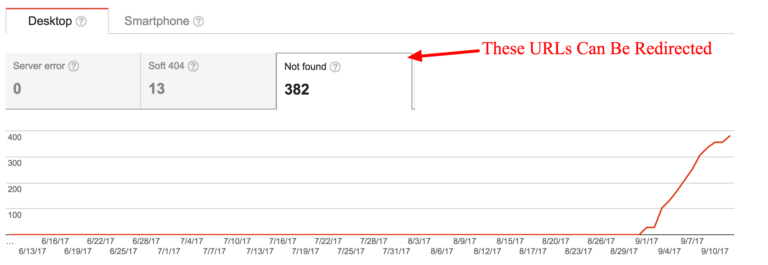
Finally, I log in to Google Search Console, open up the “Crawl Errors” report, and navigate to the “Not Found” tab. I export these URLs and confirm that they do, in fact, return 404 status codes by using Screaming Frog. I add these 404 pages to the master document.

Now there’s one master spreadsheet that contains all of the potential broken URLs in one place. De-dupe this list and run Screaming Frog in “List Mode” and export the URLs that return 404 status codes.
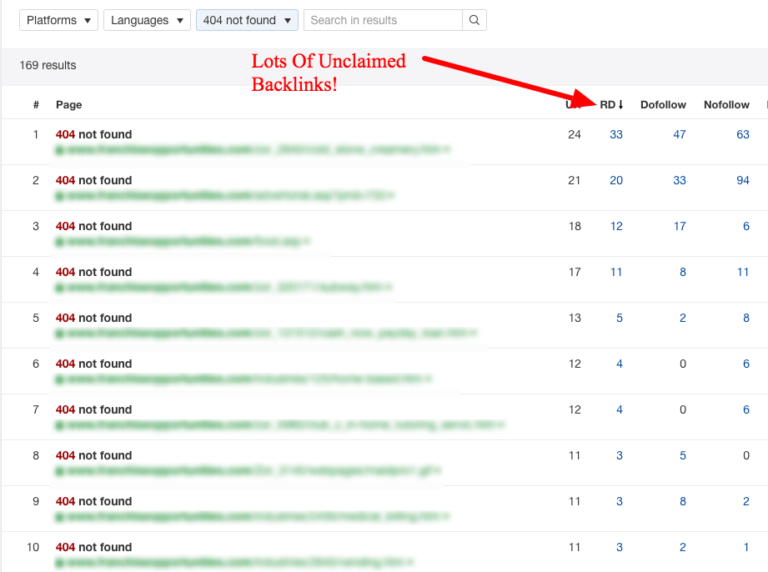
To help prioritize which URLs to redirect first, I connect Screaming Frog to the Ahrefs API, which will allow the crawler to gather the link metrics associated with each page. I sort that list by number of linking root domains and assign priority to the redirections that way.
After I have the final list of 404 errors, it’s simply a matter of identifying the destination pages on the client website each URL should redirect to. To scale this effort, I often use a combination of MergeWords and the OpenList Chrome extension.

2. Analyze the .htaccess file

When evaluating how your website distributes link equity, it’s important to understand how your global redirects are working as well. This is where the .htaccess file comes into play. In this file, you can see the syntax that instructs your website how to handle redirect rules.
When using a tool like Ahrefs, if I’m seeing common redirect patterns, this is a good sign that these rules are defined in the .htaccess file.
Often, I’ll see that the .htaccess file is causing 302 redirects that should be 301, pushing unnecessary redirects (causing redirect chains), or missing redirect rules that should be there. For instance, a common mistake I see are files that 302 redirect HTTP URLs to HTTPS instead of 301.
Each situation is entirely different, but here are some of the .htaccess rules I commonly look for:
  • “HTTP” to “HTTPS” rules
  • Non-WWW to WWW rules
  • URL capitalization rules
  • Trailing slash rules
There are many opportunities to better control the directives of the .htaccess file. If you’re noticing similar patterns of improperly configured redirects, it may be worth pulling this file and talking to your developers about how these issues can be fixed.

3. Fix internal 301 redirects

Now that you’ve accumulated as much link equity as possible from external sources, it’s time to ensure that your website is passing it efficiently internally. If your website has a bunch of internal 301 redirects, there’s a chance that your deeper pages may not be receiving as much link equity as they possibly could be. While Google claims there is no link equity lost in 3xx redirects, why leave this up to chance? I would rather be 100 percent sure that internal links are passing their full value throughout the website.
To identify these, I run Screaming Frog in “Spider Mode” on the domain being analyzed. Screaming Frog will crawl the website and gather instances of 301 redirects in the “Redirection (3xx)” report. If you want to determine the order of importance, sort this report by “Inlinks.” You will now see the pages that are internally 301 redirecting the most.
Often, these are instances of internal redirects in key areas such as the primary/secondary navigation, footer or sidebar links. This is great because with one change, you can eliminate a large quantity of these internal 301 redirects. While you’ll want to fix as many as possible, I recommend you start there.

Final thoughts

One thing I’ve learned during my time as an SEO is that webmasters are fantastic at diluting equity. Changes such as website migrations and previous URL redirects all have a large impact on link equity.
While in an ideal world link equity would be kept in mind during these implementations, that is often not the case. The above steps should serve as a good starting point to getting some of yours back.

Some opinions expressed in this article may be those of a guest author and not necessarily Search Engine Land. Staff authors are listed here.

 know more latest update or tips about Search Engine Optimization (SEO), Search Engine Marketing (SEM) - Fill ContactUs Form or call at +44 2032892236 or Email us at - adviser.illusiongroups@gmail.com. 

Wednesday, 20 September 2017

5 easy-to-miss SEO mistakes blogs make

Is your content great, but not ranking? Columnist Kristopher Jones shares some of the more common SEO errors bloggers and content marketers make.

The digital marketing landscape has evolved significantly over the last two decades. And between Google’s ever-changing algorithm and the deluge of misinformation floating through the digital marketing sphere, it’s easy to lose sight of basic practices we should be employing in our own SEO and content marketing strategies.
With every new algorithm update and technological shift in search, we become obsessed with how the field of SEO will enter a wholly new paradigm, and we shift our focus to reflect this. Yet as much as the medium may change, the core principles remain the same — and it’s time to get back to the basics.
We all understand the secrets and best practices of SEO, so why do we often fail to leverage these tactics? Let’s explore five common blogging mistakes you may be making right now.

Unoptimized keyword structure

Despite the rise of semantic search and machine learning technology, keyword research should still take precedence when modeling an internal content marketing campaign. All on-site content should be thematically linked by topics and keywords to your overall business objectives.
If our content is simply covering topics and not keywords, how do we know what users really demand? Without keyword research, how can you truly know who your audience is and who you are writing for?
Keywords serve as the bridge between user intent and informational/transactional content. Keyword-optimized content helps to position individual web pages to rank higher organically and drive impressions for targeted searches. This effectively makes blog content a lead generator.
For on-site blogs, the focus should remain on informational long-tail keyword phrases. Common examples include question phrases beginning with how, what, when, where and why.
Other keyword ideas could include actionable phrases that are often searched for, such as the top “tips” and “hacks” to improve upon some process.
Bloggers often fail to optimize their headers, meta tags and content with targeted keyword phrases. Consider the fact that specific keyword phrases will often be bolded within the meta description of a SERP listing, potentially increasing your click-through rate.
Inadequate keyword research runs deeper than failing to optimize your header structure (e.g., title, meta description). Many bloggers fail to leverage semantic SEO, or similar keyword phrases with the same meaning. Semantic SEO allows bloggers to create more thorough and readable content that can drive impressions for multiple keyword phrases, answer more user questions and qualify your content to be a featured snippet — think of the rise of voice search.
On the other hand, over-optimized content could cross a dangerous line as well. Keyword stuffing, or possessing a high keyword density, will qualify your content as spam. Keyword stuffing also obstructs your content’s readability, which results in poor user signals.
Following SEO best practices, it’s still important to optimize all relevant site elements, such as URLs and meta tags, with targeted keywords to categorize and rank individual web pages. And aside from signaling to search engines the main focus of your on-site content, keywords also serve an important function for your site architecture.

Inconsistent internal links

Internal linking is probably one of the most overlooked aspects of SEO optimization, and issues with internal links frequently occur on SEO agency websites themselves!
There are many functions of proper internal linking for SEO:
  • Establishes paths for users to navigate your website.
  • Opens up crawling to deep linked web pages and increases crawl rate.
  • Defines site architecture and your most important web pages to search engines.
  • Distributes “link juice,” or authority, throughout your website.
  • Indexes linked-to web pages by the keywords used in the hyperlink anchor text.
While backlinks remain the gold standard of search engine ranking factors, their magic can be amplified through strategic internal linking.
Ideally, you’ll want at least three to five internal links per blog post, and a drop-down or navigation menu on your home page to provide deep links to inaccessible web pages. Just because a piece of content is posted to your blog, it doesn’t mean Google or Bing can automatically access it.
Conduct a thorough internal link audit and record which web pages have the most authority. Simply insert internal links on these pages to other high-value internal pages to distribute authority evenly throughout your domain.
Many websites display featured posts in a drop-down menu or on the home page to distribute authority to their blog posts. A blogger’s home page will be his/her most authoritative. Limit the number of links between each blog post and your home page to evenly distribute link juice throughout your domain.
Don’t overlook the importance of a sitemap, either. This will ensure all web pages are properly crawled and indexed — assuming URL structures are clean and keyword-optimized.
Finally, optimize all anchor text to categorize and drive impressions for linked web pages. Be sure to use varying anchor text phrases for each link so that you can rank your web pages for multiple search queries.

Poor page copy

As we often say in digital marketing, it’s important to write for readers and not search engines. Keep content light, don’t try to show off knowledge with excessive jargon, and write for readers on an eighth-grade reading level.
In most cases, on-site content is not about publishing, but building awareness around a need. I always suggest placing actionable tips in informational content to provide value.
Content marketing is as much a branding exercise as it is a marketing tactic. Consistent content production establishes your brand’s ethos and also creates your voice as an author. In turn, this establishes you as an authority in your niche.
Don’t sacrifice this authority with poor body copy.
Look over your blog post as a whole. What does a reader experience when they first encounter your web page? Consider the fact that the average attention span is estimated to be eight seconds. Optimize your header structure and meta tags to encourage easy scanability and communicate a clear purpose.
Leverage a powerful headline to pique reader interest, and nurture this interest with a strong introductory paragraph. Always insert clear transition phrases, and consider using animated GIFs and videos to give users a mental break between long chunks of paragraphs. These will also increase your average user dwell time.
Make your content visually appealing by utilizing white space properly and inserting images after every 400 words or so. This essentially chunks content and prevents information overload.
Finally, edit fiercely. Many writers live by the rule that about two-thirds of writing should be editing and reworking. Use tools such as Grammarly and the Hemingway App to create concise and clean body copy.

Unoptimized images and videos

Speaking of poor page copy, most bloggers still ignore image and video optimization. Unoptimized image file formats and sizes are the most common load time mistakes that deteriorate SEO performance.
All on-site images should be formatted as .jpg, and all vector images as .png.
Always optimize image alt text to position it to rank in a targeted keyword image search. The alternative text is what’s displayed when a browser fails to actually display the image and tells search engines the content of your image. (It’s also used to describe images to those with screen readers.)
When optimizing video files, host all of your video files in a single folder and create a video site map for search engines to index your videos. You should optimize the meta description of all video pages with targeted keywords for indexation. Leverage a call to action in your meta description and video annotations.
Video marketing can be distributed from multiple channels, as well as your blog. According to a recent survey by HubSpot, 43 percent of consumers want to see more video from content marketers.

Poor content promotion

This leads us to probably the greatest error that plagues bloggers and stumps small businesses. We’re told that a good piece of content should serve as a natural link magnet and even rank highly based on the merits of the writing itself. To be candid, from experience we’ve discovered this isn’t always true.
Consider the idea that a 10-hour project totaling 3,245 words, featuring exquisite content and imagery, is just as useless as a poorly written 400-word listicle if it doesn’t drive conversions or traffic. This is what I refer to as potential energy. Without a proper technical structure or any content promotion strategy at work, your awe-inspiring content is a dud.
What if, after writing his Theory of Relativity, Einstein had simply posted his theory on his front door and waited for someone to discover it? Content distributed over a blog on a young domain won’t gather backlinks or social shares without promotion.
Leverage your connections, and follow these strategies to promote content and allow it to compound over social media:
  1. Have influential members of your organization share and promote a piece of content.
  2. Contact influencers over social media to share content.
  3. Request a quote from an industry thought leader to place in your content; advertise this in your rich snippet on social media channels.
  4. Repurpose content into a video or infographic for greater shareability.
  5. Contact websites that have linked to similar content in the past.
  6. Submit your content to replace relevant broken links on authoritative sites.
  7. Run a paid advertisement campaign over social media to place content directly in front of targeted audience members.
Content promotion involves thorough audience analysis. Segment audience members into one of three boundaries based on habits, demographics and psychographics. Investigate what social media channels each audience segment uses the most and the points of time when they are most active.
Understand which pieces of content perform best over specific social media channels. The most viral content examples include:
  • “How-to” tutorials
  • Infographics
  • Videos
  • Listicles
  • “Why” articles
Content serves as an effective pull marketing tactic and inbound lead generator. Yet, if content is simply sitting on the shelf and gathering dust, it’s a lost investment.
Social and user signals factor greatly into organic ranking. Essentially, social promotion will draw users to your content, which will determine — based on their engagement — the efficacy of your content.

Conclusion

SEO agencies and content marketers often tell clients about technical and onsite errors they may be making. But sometimes it takes a little realism to take a step back and analyze our own campaigns for greater success in the long run.
Hopefully, you’ll take the news that your SEO content strategy is imperfect in the right way. It’s an opportunity to refine and improve.

Some opinions expressed in this article may be those of a guest author and not necessarily Search Engine Land. Staff authors are listed here.
 know more latest update or tips about Search Engine Optimization (SEO), Search Engine Marketing (SEM) - Fill ContactUs Form or call at +44 2032892236 or Email us at - adviser.illusiongroups@gmail.com. 

Tuesday, 19 September 2017

Google Search lets readers find e-books at their local libraries

The new search feature is currently available on mobile.

Google just made it easier for readers to find an e-book at their local library.
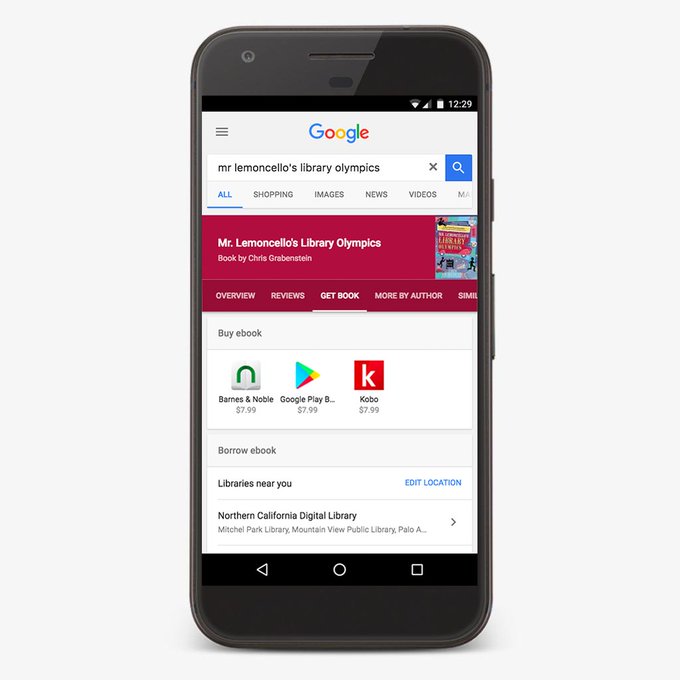
Per the following tweet from Google, mobile search results for a book now include a “Borrow e-book” option under the “Get Book” section.
Tapping on the library from where you want to check out the e-book will return the sign-in page for the library, along with the option to download the book or read a sample:
The library location can be edited within the search app by tapping on the “edit location” link next to the “Libraries Near You” option. This new feature appears to only be available on mobile.
 know more latest update or tips about Search Engine Optimization (SEO), Search Engine Marketing (SEM) - Fill ContactUs Form or call at +44 2032892236 or Email us at - adviser.illusiongroups@gmail.com. 
Thursday, 14 September 2017

Leading up to the mobile-first index, Google has some advice

Want to take your mobile site from an m-dot to responsive? Here is how Google recommends you do it.

We all know the Google mobile first index is coming soon, probably in the next few months or so. To prepare, it seems like Google is encouraging webmasters to go responsive with their web sites.
Google has just published a how-to on moving your m-dot site to responsive. The techniques are pretty basic but it is an excellent reminder that while Google supports many mobile implementations, they do recommend responsive. In fact, Google has recommended that if you are switching to responsive, do it before the mobile first rollout.
Here are the steps Google wrote to move from m-dot to responsive:
  1. Get your responsive site ready
  2. Configure 301 redirects on the old mobile URLs to point to the responsive versions (the new pages). These redirects need to be done on a per-URL basis, individually from each mobile URLs to the responsive URLs.
  3. Remove any mobile-URL specific configuration your site might have, such as conditional redirects or a vary HTTP header.
  4. As a good practice, setup rel=canonical on the responsive URLs pointing to themselves (self-referential canonicals).
know more latest update or tips about Search Engine Optimization (SEO), Search Engine Marketing (SEM) - Fill ContactUs Form or call at +44 2032892236 or Email us at - adviser.illusiongroups@gmail.com. 

Tuesday, 12 September 2017

Yelp says Google violated ‘do not crawl’ provision of 2013 FTC settlement agreement

Reportedly, numerous Yelp business images were found in Google Maps.

Yelp has sent a letter to the Federal Trade Commission (FTC) asserting that Google is improperly using Yelp images in local search results in violation of its 2013 antitrust settlement with the regulatory agency. Yelp also circulated the letter to several members of Congress and state attorneys general, according to a report in The Wall Street Journal.
The 2013 settlement concluded nearly two years of investigations and political maneuvering. As part of the agreement, Google said it would:
[M]ake available a web-based notice form that provides website owners with the option to opt out from display on Google’s Covered Webpages of content from their website that has been crawled by Google. When a website owner exercises this option, Google will cease displaying crawled content from the domain name designated by the website owner on Covered Webpages on the google.com domain in the United States. Website owners will be able to exercise the opt-out described above by completing a web-based notice form. Google will implement the opt-out within 30 business days of receiving a properly completed notice form . . .
Reportedly, the commitment lasts through the end of this year, though that isn’t explicitly stated in the FTC discussion of the settlement or Google’s accompanying letter to the FTC.
The “do not crawl” provision of the settlement agreement came partly in response to 2011 Yelp claims that Google was requiring that the review site allow use of its content on Google Place Pages as a condition of being included in Google’s search index.
I have been unable to independently find Yelp images being used in Google Maps. However, the WSJ article cites multiple examples:
Yelp said it investigated and found that over one hour, Google pulled images from Yelp’s servers nearly 386,000 times for business listings in Google Maps, which Google exempted from its promise to not scrape content. Yelp then searched Google for 150 of the businesses from those map listings and found that for 110 of them, Google used a Yelp photo as the lead image in the businesses’ listings in search results.
For instance, googling “brooklyn zoo williamsburg” on a smartphone yields a box atop the search results with information about the Brooklyn Zoo NY gym in Brooklyn, including its address, hours and reviews. Also included is a photo of the gym’s interior, which was pulled from its Yelp page. Other examples include Mount Sinai Hospital in Chicago and the Capital Mall in Olympia, Wash. Users or business owners typically post photos on Yelp.
If Google is found in violation of the 2013 settlement agreement, each instance “may result in a civil penalty of up to $16,000,” according to the FTC release. If each image is treated as a separate violation, that would hypothetically trigger penalties of more than $6 billion, which is entirely unlikely.
If the “do not crawl” provision of the agreement does in fact expire at the end of this year, it’s not clear what will happen in 2018. Google could potentially resume crawling and inclusion of third-party content over publisher objections. I suspect, however, that Google would not do so and risk a high-profile outcry from Yelp and potentially others.
Such a move wouldn’t help Google’s case in Europe, nor in the US, where an uncertain and volatile political climate could potentially create new risks for the company.
Postscript: After this story posted, Google provided the following comment:
For many years, we’ve been in regular contact with Yelp about product changes and how they appear in search results. This is the first time we’ve heard of Yelp’s complaint that images from their site may be appearing in the way they claim. If they’d raised this concern with us, we would have immediately taken steps to look at the issue and update these results — as we’re doing now.
know more latest update or tips about Search Engine Optimization (SEO), Search Engine Marketing (SEM) - Fill ContactUs Form or call at +44 2032892236 or Email us at - adviser.illusiongroups@gmail.com.